notice
Notices/Bulletin Board
Check out the latest news and important announcements from Saekim Plastic Surgery.
Sausage Eyes, Is It Due to Swollen Double Eyelids? Causes and Correction Methods
Writer
saekimps
Date Created
2026-09-22 17:42
Lookup
136
"Even though some time has passed since my double eyelid surgery, the area below the line still looks thick.. Is there still some swelling?? "
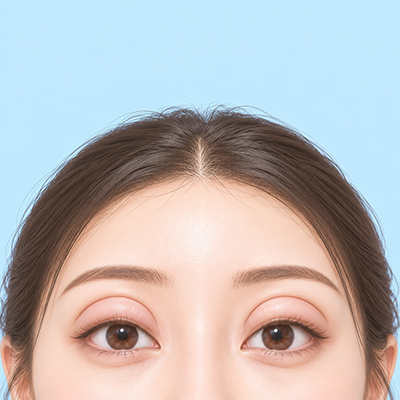
A condition where the skin below the crease appears thick and rolled up after double eyelid surgery, making the eyelids look thick like sausages.
Often Sausage eyesIt is expressed as '
You need to examine the height of the line, the condition of the tissue, and the strength of the eye opening together.
Q1. Why do sausage eyes develop?
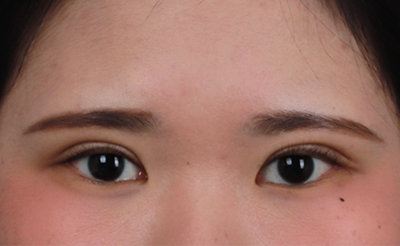
The first thing to consider is the height of the double eyelid line. If you force a high line that is difficult to create naturally, the tissue beneath the line may not be able to retract sufficiently, causing the eyelids to appear round and thickly rolled.
However, sausage eyes can occur even if the crease is not very high. If significant scarring occurs around the crease after incision surgery and the eyelid tissue hardens, the skin may not be able to fold inward naturally and may remain thick.
Sausage eyes are not simply caused by excess flesh; factors such as the height of the eyelid line and tissue changes due to scarring must also be considered.
Q2. Does the swelling linger for a long time and turn into sausage eyes?
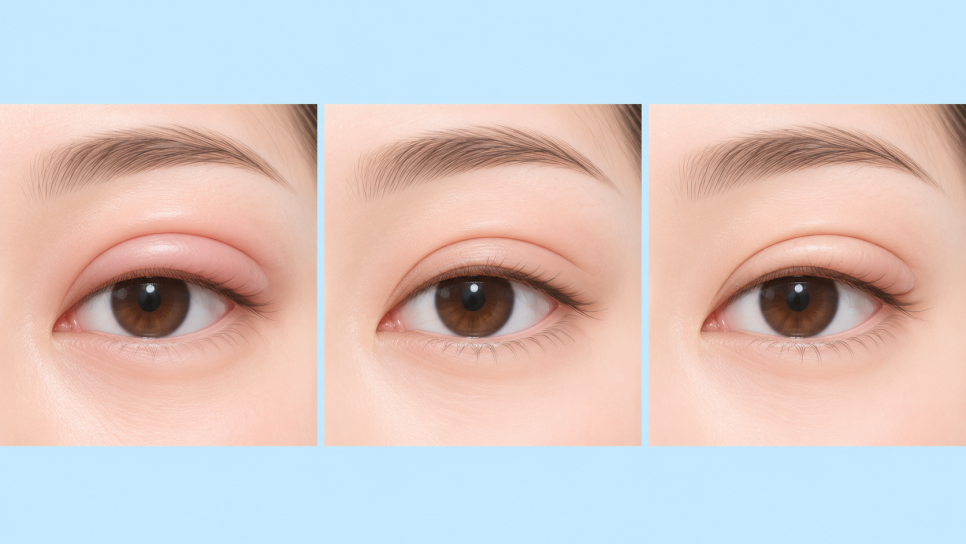
In the video, Director Yoon Tae-ho does not explain sausage eyes as being caused simply by swelling. While everyone may experience some degree of swelling in the early stages after surgery,
Sausage eyes are associated with a structural condition where the tissue fails to roll smoothly inward and remains below the line.
Therefore, it is difficult to conclude that one is prone to developing sausage eyes simply because their eyes swell easily. It is necessary to distinguish between swelling during recovery and a condition where the area below the eyelid line remains thick even after some time has passed.
Q3. Can the strength of opening the eyes also have an effect?
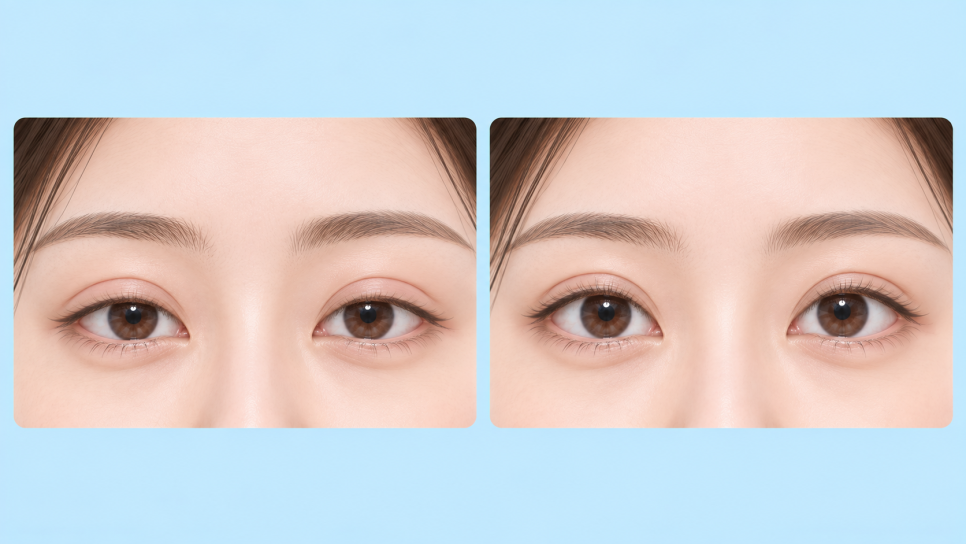
The strength of your eye-opening ability can also affect how prominent sausage eyes appear. If your eye-opening strength improves, the double eyelid line folds more deeply, making the thicker part relatively less visible.
Conversely, if the eyelid tissue is firm and the eye-opening strength is insufficient, the tissue may not fold completely inward even at a low line, making it look like a sausage.
Even double eyelids of the same height can look different depending on the condition of the eyelid tissue and the strength of the eye opening.
Q4. Will I still get sausage eyes even if I have surgery using the buried suture method?
The video focuses on cases where "sausage eyes" appear with the incisional method rather than the buried suture method. It explains that with the buried suture method, the line can loosen if the fixation is not maintained strongly, so it is uncommon for the eye to remain thick enough to form "sausage eyes" for it to persist.
On the other hand, in the incisional method, because not only the high line but also the scar tissue and tissue firmness around the incision line can have an impact,
It is important to examine the causes in detail.
Q5. How can sausage eyes be corrected?
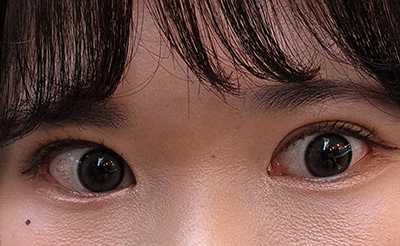
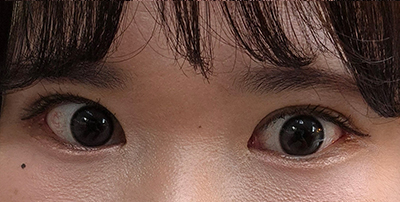
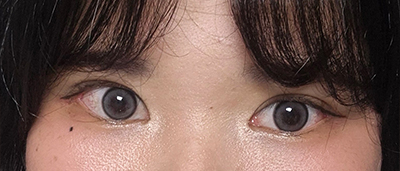
The correction method also varies depending on the cause.
We may consider lowering the high double eyelid line or releasing scars and adhesions. If the strength of the eye-opening muscles is a contributing factor, an approach that takes this into account may be necessary.
If multiple surgeries have been performed and there is insufficient skin elasticity or if existing lines are strongly established, it may be difficult to approach the problem in the same way. The video also explains that the correction method may vary depending on skin elasticity and the condition of the existing lines.
Furthermore, viewing sausage eyes as a fat problem and approaching them by reducing fat may not align with the cause.
For sausage eyes, you shouldn't just look at the thick part; you need to look at the cause.
To prevent sausage eyes, it is important to consider a line that can form naturally on your eyes, rather than unconditionally creating a large and high double eyelid line.
If your eyes already look like sausage eyes, you need to distinguish whether it is simply swelling, a high eyelid line, hardened tissue due to scarring, or if the strength of your eye-opening ability is affecting them.
Rather than approaching the issue based solely on the result that the area below the line is thick, it is important to first identify why it looks that way to determine the direction of correction.
At Saegim Plastic Surgery, Director Yoon Tae-ho examines the height of the double eyelid line, eyelid tissue, and the condition of previous surgeries to determine the corrective direction tailored to the cause of the sausage eye.